Sunday, July 30, 2023

A garden shed

 Finally built a garden shed, as the garage was getting rather crowded.


A lot of the material was scrounged, or leftovers, or bought at random intervals, mostly from a friend who had to end his sawmill days and clear out the inventory before moving. So, some odd choices, but it made it more interesting to design as we went.

I had read about the wood preservation technique of Yakisugi ( or shou sugi ban), as mentioned in a post from last year. That is one of the bigger experiments in this adventure. Turns out to use a LOT of propane to do the treatment. That, or perfect the traditional method, which is quicker, but trickier. We decided to just do part of one wall with this method, and wood shingles ( also made by the friend from pine on his land) and metal for the rest.

Flat land is hard to come by here, so we had a contractor flatten an area near the house. The drop off was still rather much, so I am building a retaining wall to stabilize things. I've used tires for walls in the past. While they can be had for free, they require lots of labor and are time consuming, so went with the easy landscaping blocks. each weighs 82 lbs( 37kg). 

Since I was rather in a hurry, and not getting any younger, I actually hired a young fellow for the day to help. First time I had ever done that, and it went well.

 A harbinger of things to come??

Next up is a greenhouse. Will report on that when it is finished.


Wednesday, March 15, 2023

hazelnut lessons learned

 This year's hazelnut harvest is the largest yet, as the trees continue to come in to full production. 

It was a real challenge for just my wife and I hand harvesting, since the ripening nuts start falling to the ground a couple weeks after ripe enough to harvest, and they are impossible to gather once on the ground in the tall grass. The window is narrow with all the other things going on. Research is being done to mechanize harvest, but likely we'll be hiring help for the near future.

Harvest is a one time pass through, and all are harvested even if some of the husks (involucres) are not drying back yet. The genetics of these selected hazels is still variable, so they don't all ripen at the same time. Multiple picking passes would be quite onerous, so we put in drying bins for a couple weeks to finish drying, making the husking effort  much easier.

After husking they are bagged and hauled to where the prototype shelling equipment is, a five hour drive from here. This equipment is far quicker than hand shelling, but again, the genetics of these hazels is still a work in progress, so the equipment has to handle a large range of sizes and properties.

Hazelnuts as a new food crop for the midwest is slowly progressing, but in a low energy future, perennial food crops will be much more central to our diet. Us early adapters and permaculture advocates hope eventually millions of acres of corn and soybeans will be switched to trees like hazels, but the current system does not want to change. 

Here are photos of the processing and kitchen experiments.

These are kernels back from the sheller. Note that in the real world, food is not all cosmetically perfect, and one uses their own judgement as to how much funkiness is acceptable.


Not the greatest photo, but these are hazels that have been toasted a bit and lightly coated with maple syrup, salt, and pumpkin pie spice. Crunchy and tasty.


This is some nuts being turned in to nut butter in a melanger. Normally, melangers are used to take cocoa nibs and make very smooth cocoa liquor, but it works fine to break down the nuts. This this has granite wheels that spin around and thoroughly grind the kernels. I've also made a batch of hazel and chocolate spread to replace Nutella, which is yummy, but environmentally poor. We are calling our stuff "chazel". It has hazelnuts, cocoa powder, and sugar- that's it. No palm oil or other stuff.


Here is some nut oil fresh from the press, with fines and water/oil emulsion settling out. I'll pour off the clarified oil and store it that way. The Piteba press works optimally if the nut are at 10% moisture. I checked moisture content, adjusted, and pressed, so this emulsion results. I boil the water off and filter to get there rest of the oil.


Some lessons learned: The nut butter has an odd mouth feel, way more stick to your mouth compared to peanut butter. We will do more experiments with added ingredients.


The nuts are around 30% oil, but this home scale press only gets a little over half the oil. The rest stays in the press cake. We are using the press cake in baked goods, and if nothing else, food for the chickens, who love it.

The volume and weight ratio of harvested nut in the shell with husks still on to the shelled kernels is crazy. Lots of effort to get to useable food.


Friday, January 13, 2023

Snow and rumination on acclimatization


Got a wet, clingy snow this past week, and it really hung on to the trees and caused drooping and breaking of limbs.


We hiked the trails through our woods, and reveled at the transformed landscape, but had to really tunnel though in spots where the crusted vegetation blocked our way.

Got me to thinking once again about how not just plants and animals have figured out how to get through winter with all its challenges, but what about those hardy souls that walked across the Bering Straight and lived here for thousands of years once the glaciers receded and the land recovered?

We've domesticated ourselves in the last few centuries, and we've gained a lot of knowledge, but lost some as well. As we try to wean ourselves off fossil fuels, and are forced to move from the lifestyles that are really only a very recent thing, what will we relearn? 

I recently read a book that had some accounts by early European impressions of the indigenous folks who got here first. They were seeing the lifestyles of people that had not yet been altered by the brutal imposition of the European replacement. Anyway, the writer was watching some kids playing on an iced over pond, with scant clothing, and having a ball, seemingly unaffected by the cold.

So humans have an ability to acclimatize, maybe more than most of us in coddled modern lifestyles realize. All warm blooded animals strive for homeostasis, and that is one aspect of it.

To give an example, we had an early cold snap here this winter, and so I got a lot of acclimatization done early. Yesterday, a relatively warmer day at 38F/3C, I did some work outside finishing up a shed I had built this fall. After a bit, I had to take off the coat, hat and gloves to feel comfortable. Two months ago, I'd have been chilled to the bone at the same temperature.

We heat the home with wood primarily, but have propane heat backup for the upstairs bedroom. We set that thermostat for 50F/10C and are quite comfortable with a good comforter on the bed. (Admittedly, it seldom gets that cold except on very cold nights, 55F-60F or so is more normal).

As the end of fossil fuels continues and becomes more evident, turning down thermostats, intentionally acclimatizing to the seasons will not just save energy and cost, it will prepare us for the future that is coming.


Wednesday, December 21, 2022

Sugar from sugar beets- homestead style

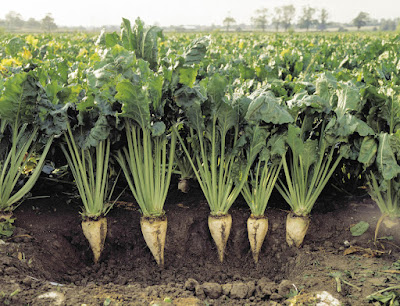
 Our experiment with sugar beets has concluded. These Lovecraftian beasts were what our crop looked like on harvest.


So we're not doing that again ( for now). When studying the crop on line earlier, ( see my Feb. 10 post ) the roots looked so smooth, uniform, tidy, and big. Since this was an experiment, I only planted about twenty seeds. Germination was not that great, and ended up with a dozen plants.

I did water the plants occasionally this past summer, and weeded them, but I'm generally trying to find food sources that can handle minimal inputs and management. During the summer, the tops looked vigorous and large, much larger than regular beets. No clue why the roots got so gnarly and feral looking. The soil had fairly good tilth and organic content.

These guys needed more peeling, cutting, and trimming than I had thought, but that was not the clincher. I just didn't get that much sugar for the effort. Running through a food processor to shred, throwing in a pot to boil a bit and then straining the water though cheesecloth, and then cooking down to a syrupy consistency, it was a fair bit of work to do at small scale, for not much reward.

Taste was ok. You could tell it was not your regular sugar, but I got no strong added taste, and when used to sweeten my last batch of granola, could detect no hint of earthy beet taste.

Did my technique need improvement? Could I have gotten a lot more sugar out with a tweak to my process? Maybe so, but for now, I think I'll stick to the maple syrup we tap and cook down. And of course, as with most of us, I could eat less sugar.


Tuesday, July 19, 2022

Porous borders


In my college studies to be a civil engineer, we were taught how to solve for the forces and resulting stresses by drawing a boundary around the item or area in question, and then systematically identifying and accounting for all forces that crossed this boundary. This was called a"free body diagram". 

This is a tool to break down complex systems so individual elements can be analyzed and quantified. It is also a tool that doesn't work well with a good bit of the real world. A beam connecting to a column is laughably simple compared to ecosystems.

This famous quote by John Muir is more like how things interact:

"When we try to pick out anything by itself, we find it hitched to everything else in the Universe."

I was thinking about this as I wondered just how far we've come on our journey to self reliance here on our homestead.

Not very far. 

Now, I realize that to be completely self reliant is impossible and a very unrealistic, even counterproductive goal. But, ever striving to reduce dependance on the fossil fuel enabled economy and logistical chains is I think prudent.

So here is a rough first cut at defining the "free body diagram" for our home, and acknowledging all the dependencies that remain.


Crossing the boundary:

Sunshine, air and rain are givens of course.

Food from the grocery store as there are still many things we don't grow ourselves.

electricity- We generate a fair portion here, but the grid is the 24/7 backup and supplement. 

Feed for the chickens- It's organic, and they forage a certain amount, but the majority of their calories are still from the feed store.

Building materials for the various projects and regular maintenance.

Information from the internet that would otherwise be very difficult to find so quickly.

Seeds- We do some seed saving, but more than half our garden, and all the tree seedlings are from suppliers.

Chickens- We haven't pushed the incubating and hatching like we could, so still buy chicks every so often.

Gasoline- to run the brush mower, tiller, chain saw, and of course the cars that get us to town and haul things for us.

Money- Our savings and income leave the home in exchange for the above purchased items.

All manner of personal goods- Clothes, cleaning supplies, medicine, all the "normal" household goods we so easily acquire today, coming from hundreds and thousands of miles away.

I'll even count water, as the domestic water is from our deep well. It would be inaccessible if not for electricity and the well pump. Till now, we are only capturing a small percentage of rain from the roof, to use for watering trees. So much more to be had.

Just pausing to think about losing one or more of these connections should make one deeply appreciative of the flows across our boundaries that sustain us.


So where do we fit in here?

Ecosystem Project-FOOD WEB - MRS. CHRISTENSON'S CLASS WEBSITE


Tuesday, April 26, 2022

The egg report

 Update on the egg  storage experiment.........

From my March 29, 2021 post, we get an abundance of eggs in the spring, when the hens start back up after taking the winter off. I stored some eggs in half gallon mason jars covered in a water-calcium hydroxide ( pickling lime) solution.

This late winter and spring 2022, a year later, we have tried them out and find them to be fine for most things. They are quite edible, with no off taste that I could tell, ( and I'm still alive) but the consistency has changed a bit. The whites have a bit less body, and the yolks have a tendency to settle next to the shell, and sometimes stick to the shell a little. This means they are fine for scrambled eggs or baking, but are tricky to use if you want sunny side up fried eggs.

All in all, a success I'd say, and storage for a year is quite impressive. Again, these are unwashed, unrefrigerated eggs fresh from the hens, I don't know if store bought eggs would fare the same.

We have also been hand rolling egg noodles and drying them as another way to store eggs. Just this week, we used the pasta extrusion attachment on the KitchenAid, and the macaroni turned out pretty good. We ate some macaroni fresh, but have dried some also, and will see how they cook up later.


Thursday, February 10, 2022

From bees to beets

 To bee or not to bee, that is the question. Whether tis nobler in the hive to suffer the mites and diseases of outrageous nature, or....................to grow beets.

I've come to accept that for now at least, I do not have the husbandry habits to be a beekeeper. Chickens? Pigs? Other critters, yes, but bees seem to be a combination of bother with protection, non chemical hive health management, and remembering to tend  them with some regularity that it's not working for me. They seem so self sufficient most of the time, and it just slips my mind, or when I do think of checking on them, I just say one more day won't hurt.

 Keeping bees alive through Wisconsin winters and dealing with colony collapse, varroa mites and other pests requires more attention and interest than I have been able to give. Even long time beekeepers lose a lot of hives each year.

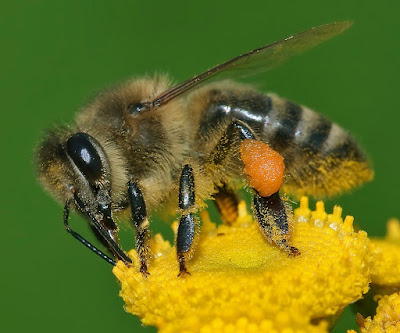
But I also know that I have an incurable sweet tooth, and there are a reasonable number of native pollinators that can do the honors in spring when the flowers bloom.

I've been tapping a few box elder and maple trees for a bit of syrup, which been great, but it's good to have redundancy in as many things as you can.

So, letting the hives stand empty for now. I plan to try growing sugar beets for the first time this next garden year. I've read up on it a bit, and found some methods described to extract and distill the sugar ( they are 20% sugar content by one source) that don't sound too tricky. 

Wash, shred, boil in water, strain, cook down, how hard could it be? We'll find out this fall.


Monday, February 7, 2022

Seeing the water


Don't know how much truth there is to it, or if the truth of it really matters, but there is a saying that fish aren't aware of the water they live in because they are immersed in it from birth, and it is just a universal aspect of every part of their lives.


The concept is then used for us to imagine what aspect of our lives is unquestioned and "invisible" to us because it's always there and is background to us, even though it is essential or has major impact on our behavior.

So, weak as the analogy is, what things are there that we "swim through" every day that we need to realize affect us? How could one stand to the side, summon up an impartial perspective, and see the paradigms we live by that might be completely arbitrary or even dysfunctional?

We are more complex than fish ( in some ways) so there could be myriad layers of reality and human interaction that are taken for granted but might be available for understanding and acknowledgment. 

White privilege is a concept recently in the news that is a good example of one of these layers that at least the Caucasian of us in the U.S. could try to gain awareness of. That particular layer is not a universal, but are there other, more universal media that all human societies are immersed in? If not, what does that say? If so, what are they?

I think one of, if not the most important invisible mediums we are immersed in is that of the luxury and ease afforded by our fossil fuel slaves. A barrel of oil contains the equivalent of roughly 25,000 hours of human labor. Here is a good primer on the concept:

http://22billionenergyslaves.blogspot.com/2013/11/our-army-of-invisible-helpers.htm

Every waking minute, we ( at least those of us likely to be reading this blog on our electronic devices) are surrounded by materials, services, and ease of life entirely supported on a foundation of fossil fuels. To become aware, and appreciate the implications, one soon thinks about the ephemeral state of this ease that relies on a resource that is soon to decline. Ask yourself, what should a fish do when it senses the waters receding? Maybe swim toward waters from another source?

I've been reading books lately about the widely varied ways that humans have gone about organizing themselves in groups, cultures, empires, and what it might mean for our potential to chart a rational future path. 

I gotta say, there have been ( and are) some really weird beliefs and ways humans have chosen to organize themselves.

But we first worlders of usually European descent currently seem to all think that all that history inevitably led up to us, as we are, and things will just keep on progressing......Where?

We are in a time of change, and it will require massive acts of imagination and reflection to see the myriad waters we swim in, and figure out the direction toward water from deep, reliable springs.


Sunday, January 23, 2022

seeds of change

 I just received the last of the garden seeds I ordered. Last year, covid caused a lot of first time gardeners, and seed availability was affected. I had to scramble to get everything on our list, but ended up ok, just couldn't get some of our favorite varieties.

This year I ordered a bit early, and did see a bit of sold out stock, but in general, much better than last year. So, did all those new gardeners become once off gardeners? Did the seed companies ramp up in reaction to the new surge? Don't know, but we are set, and starting plants indoors is not that far away.

I have never listed what all we grow, but thought I would now just to show the large variety, which we feel is important to stay resilient, since the weather from year to year results in some veggies having a good year, and others a dud. This way we always have something to put in the larder. We are also shifting further to heirlooms and less hybrids, to do more seed saving than we have so far.

So here you go, in no order, just off the top of my head.

carrots

parsnips

beets

broccoli

brussels sprouts

lacinato kale

collards

lettuce

red cabbage

green cabbage

shelling peas

potatoes

flint corn

four types of soup beans

butternut squash

honey nut squash

kabocha squash

cucumbers

red onions

yellow onions

shallots

hard neck garlic

ancho peppers

sweet peppers

cherry tomatoes

slicer/sauce tomatoes

zucchini

lima beans

rutabaga

swiss chard

okra

So that's the garden. We have an asparagus and rhubarb patch, and some black raspberries that are going a bit feral.

We also grow cilantro, basil, rosemary, thyme, and mint in our herb garden near the house.

In past years, we've grown wheat, green beans and sweet corn, but we still have plenty of wheat and green beans ( both canned and frozen), and corn can be a pain, takes a lot of room, so now just buy from a local farm that specializes in it.

I also ordered some more trees. More apple, pear, tart cherry, hazelnuts, and some hackberry for the critters. I'll review the trees in more detail another time.

Here is the south garden, asleep in the snow. 9F ( -13C) as I type.


Monday, September 13, 2021

September

 Wow, time has flown this summer. I won't try to recap, but for now will just mention that we finished harvesting this year's hazelnuts.

Our hazelnuts are hybrids, and some plants have bushlike genetics, and some have more treelike genetics, and they all ripen at different times, and have different sized nuts. As the outer husk, or involucre starts drying and separating from the nut, you only have a short amount of time to pick the nuts directly from the bush. Once the nuts fall to the ground, collection is very tedious, and probably a net loss of calories.

So once "most" of the nuts are ripe enough, we pick them all, and let them finish drying in bins in the barn. Once they have finished drying, dehusking is much easier. They can then be stored for shelling later.

Each year, as the plants come more in to full growth and production, the yield has increased where it is real work to get them all picked before they fully dry and fall to the ground. Most will be sold, or traded as barter, but I'm saving back a good portion to eat and experiment with various recipes.

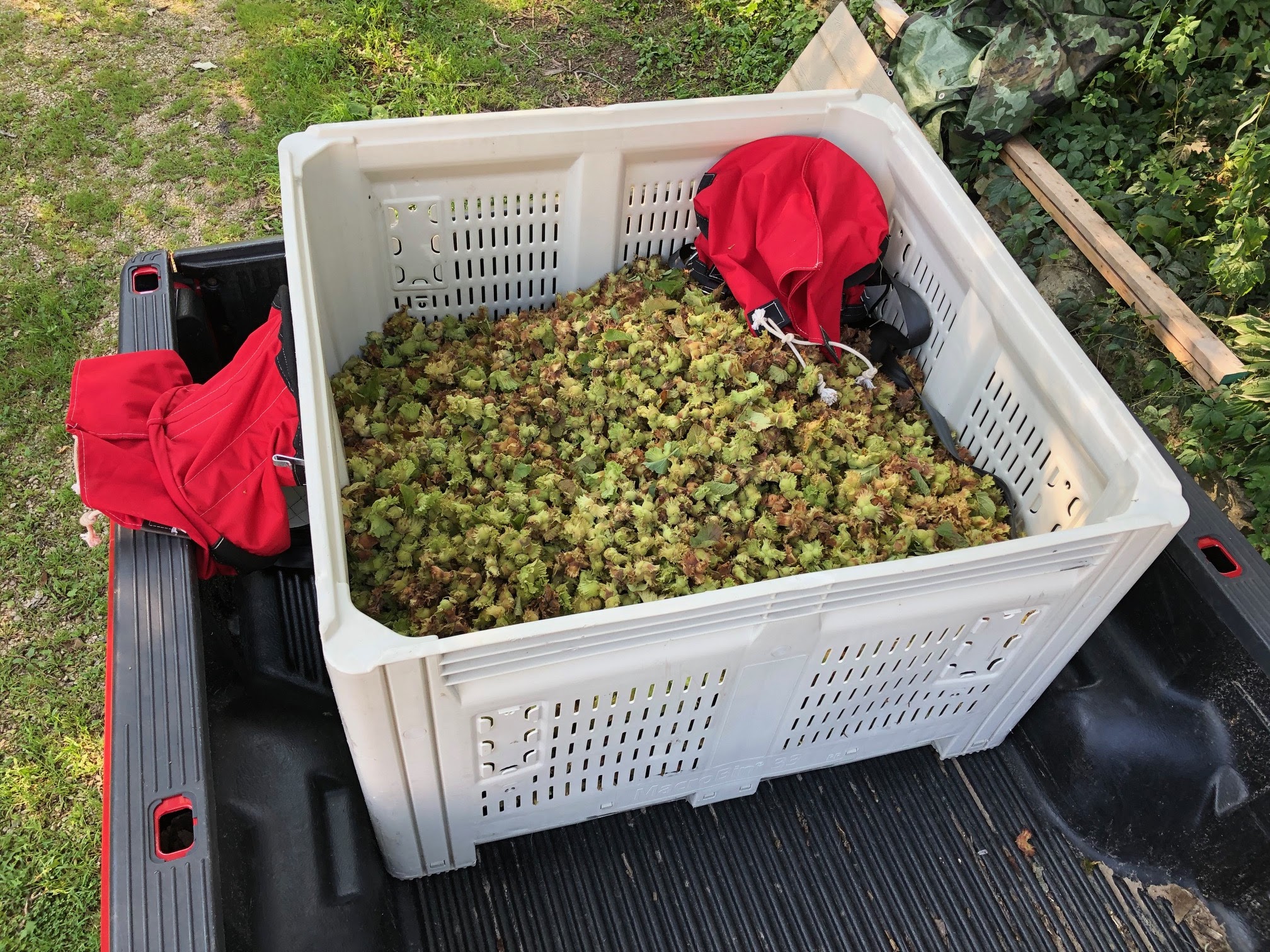
I'm bad at photographing progress, but here in the back of the truck is one of the harvest bins half full. We eventually harvested about three binfulls of nuts.


Friday, May 28, 2021

finger pointing

https://slate.com/technology/2021/05/shell-dutch-court-ruling-engine-no-1-exxonmobile.html

This article is just one of many I could have linked that describe the litigation, protest, and anger aimed at fossil fuel companies. The number of people around the world that are becoming aware of and concerned about global warming grows continuously, but full awareness is sadly lagging.

Oil companies would collapse into bankruptcy if there was no demand for their products. We the consumers are the other partner in this dead end pillage and waste of the planet's resources. Until we acknowledge our own complicity and truly make the changes needed, this era will continue ineffective and misguided confrontation theater.


I fully realize that the changes required are massive and painful, but we live on a finite planet. It's not an if, but a when the party will end. It would be preferable to wind down in an organized, methodical fashion than through chaos.  And I admit how far I have to go to change. All I can do is work on it one step at a time, and not waste time looking for scapegoats.

And while I'm at it, can we all quit fixating on climate change? It's a terrible thing we've wrought, but it's a SYMPTOM. I think I understand why the environmental movement decided to focus on climate change, but now wonder if it was a strategic mistake? There was probably no good way to tell people they have to scale back and live a much less convenient life.

The real issue is overconsumption, and climate is one of the many side effects of our population overshoot and lifestyles. If we somehow figured out how to reduce CO2 in the atmosphere from some Deus ex machina technology, we'd still be screwed by all the other impacts and depletion that are unwinding at the same time.


Won't be that long till they all look like this. What then?


Oil companies have been defensive and even deceitful, but they are protecting their interest as we all have been doing by denying our part in this.  So stop blaming oil companies and look inward.

Ok, end of rant. (too much coffee).


Tuesday, May 18, 2021

Gardening Sheds on fire

 I have been slowly gathering materials for a garden shed.( turns out TOO slowly! material prices have gone nuts due to pandemic caused disruptions in supply and demand)

Design decisions have prioritized local materials, and attempts to be more sustainable. A nearby friend has his own sawmill, making lumber from pines that were on his land. I bought most of the framing lumber I needed from him.

The roof will be steel, bought from a local Amish business. The steel coils aren't actually made there, but they fabricate the roofing panels there. All without electricity.

Here is the real experiment though, something I had never heard of till recently, and why I titled the post like I did.

There is a technique of siding preservation that involves charring the surface. This layer of charred wood minimizes rot and sun weathering, since fungus cannot break down this form of carbon, and leads to very long lifetimes for the wood. 

This technique is becoming all the rage recently, and was first widely used in Japan. Thus it's name(s).

https://en.wikipedia.org/wiki/Yakisugi

https://mrtimbers.com/shou-sugi-ban/


Will post later on  how it goes.


Monday, March 29, 2021

storing eggs long term

 We've been keeping a flock of laying hens for a few years now, and are used to the annual up and down cycle of egg production. In late fall, as molting happens, and as hours of daylight lessen, we get fewer eggs. And since some of the hens are getting on in years, the falloff can be rather dramatic. 

Today, late March, they are back in good production, and laying more eggs than the two of us can eat. In the past, we would sell or barter some, but that has been more random this year, so I started thinking about ways to store and even out our egg supply through the year. 

I remember reading about pioneers heading out across the plains with eggs in barrels full of lard or waterglass ( sodium silicate), but both those ideas sounded rather messy and uncertain.

I searched various homesteading and prepping websites, and settled on using pickling lime ( calcium hydroxide) solution. Eggs need to be unwashed and fresh from the hens, and clean. The source I used says use a ratio of an ounce of pickling lime to a quart of water, and make sure eggs are fully submerged.

I have no idea by what mechanism this is supposed to work, so this is definitely an experiment.

While the solubility in water is not that great, it does enough that the resulting solution has a pH of over 12. We will store away a few dozen now, and try them out next winter, to see how well this works. I'll do a post then to report how well the technique works.

Here is the solution right after mixing and pouring over the eggs:


And here is the solution after much has settled out:


Wednesday, February 24, 2021

descent engineering part two

Back in April of 2017, I posted some thoughts on what the engineering discipline should try to consider for design criteria as we approach the end of the fossil fuel era. What I did not do, was list any of the things that the engineering disciplines should first figure out how to redesign.

There is an uncertain amount of time till we get severe energy constraints on making infrastructure choices.  It would be best to work over those things that are most critical to reducing the shock to society as our lifestyles change. We actually always have constraints on what is feasible, the ever-present gap between wants and needs.

We will be entering a phase where the balance between effort and return will be a marked change from what we've done the last two hundred years or so. Instead of the enormous energy source of fossil fuels, we'll be back to muscle, wind, water for power, and easy to mine materials will have been already harvested. So one would REALLY need something badly to marshal the effort and resources to create or maintain infrastructure.

Just a wild guess here, but we will probably have a century or two where engineering will be relevant and a potential aid to soften the descent.

In fact, the very profession of engineering may eventually become obsolete. At some point, craftsmanship and being limited to simple infrastructure will result that we won't need calculus or stress analysis. The odd cathedral or bridge would be made from stone and wood, and maybe one or two engineers. It'a actually amazing to see some of the structures that were designed without the aid of calculus and engineering as we know it today.

I read this account of the large dome built in Florence, Italy, and recommend it for the story as well as the example of significant structures that did not need engineers as we understand them today. 

https://www.amazon.com/Brunelleschis-Dome-Renaissance-Reinvented-Architecture/dp/1620401932

This architect's blog entry has the short version in the first ten or so paragraphs:
http://fiveyearsproject.blogspot.com/2015/05/brunelleschis-dome.html


I'll point out that they did it without fossil fuels and modern equipment, but it took generations to do, in addition to the devout faith based persistence required to complete something of this magnitude. What might our descendants deem justified to build at this level of effort and duration? 

So here are a few design problems that might be called engineering problems.

1. redesign concrete. They say the first thing to do when you find yourself in a hole is to stop digging. Concrete as made today will only last from 25-100 years. It takes huge amounts of energy to produce, and all the millions of tons we have built with it so far will need to be replaced if we want to maintain  our current arrangements, and much of it its coming to the end of its life. Time to stop making things from concrete. ( and believe it or not, we are running out of sand!)
https://www.businessinsider.com/global-sand-shortage-could-cause-damaging-effects-2018-12

Maybe engineers need to come up with a design method that replaces concrete with stone, or other natural materials, and begins creating standard designs for all the critical infrastructure we feel needs to be maintained. Even if they can't be rebuilt now, the designs will be there, "shovel ready". One would hope that modern stress analysis could make these designs more efficient than similar structures from the past that were made of stone.

2. Water. Again, many impressive canal and irrigation systems were built in the past without fossil energy or engineers, but designing new canals and water distribution for the locations which now rely on pumped water would be a key need. Another side result is that some cities or areas will be assessed and come up short on low energy input water options, and should be abandoned. In addition to water distribution, low tech ways to assure germ free water will need to be reinstituted. No more chlorine injection or pumps and motorized clarifiers to treat incoming water. 

Changing weather patterns will make this tricky to predict, but also making water management all the more important.

3. transportation- add more canals, reopen old abandoned canals, and redesign roads. Roman roads lasted ( and some still last) hundreds of years, because they were built to last. Copying Roman designs won't work for the many places that get freeze thaw cycles, plus, we have much heavier loads than the horse traffic of Roman times, so coming up with designs that don't use concrete or asphalt, and will last centuries would be useful for the key routes that will justify such effort.

4. Energy- Biogas, pyrolysis gas, oils, various ways to make electricity or generate mechanical work from organic materials exist, but need more design work to become more efficient, and to scale up to an appropriate level. Work has been done to burn pyrolysis gas and oils in turbines, but turbines have been optimized for methane, other fossil fuels, and need redesign for bio materials. I'm thinking that steam power could persist for quite a long time, and direct mechanical wind energy conversion will return as well. These could both benefit from the engineering analysis that has been done to make them more durable and efficient than their ancestors.

5. It's more of a question of political will, but transportation in general, especially shipping trade goods will need a return to simpler, low energy methods. 

So much of current engineering knowledge is bound up in, and caters to the high energy, complex technology society we live in. Once one starts thinking about what could persist without the initial foundation of plentiful energy, the house of cards looks pretty shaky. It also makes much engineering expertise a bit irrelevant in a low energy future.


Tuesday, January 12, 2021

Return of the Pissoir?

 Humans, all 7.8 billion of us as of 2020, comprise an outsized portion of the world's mammals. We and our livestock equal roughly twenty times the biomass of all remaining mammals, and are still increasing.

https://www.greenpeace.org/international/story/17788/how-much-of-earths-biomass-is-affected-by-humans/

We have become the unlimited apex predator, and consume a huge portion of the annual world photosynthetic productivity. This trend can't continue, but for now, there it is.

http://vaclavsmil.com/wp-content/uploads/PDR37-4.Smil_.pgs613-636.pdf

Population overshoot and our impact on the world is the start for myriad topics of discussion, but this post is about pee.

Our population trend is only made possible through the energy utilization of fossil fuels. This energy base enables easy access to all the other many resources we consume. Industrial agriculture relies not just on fuel to run tractors and harvest equipment, it is used to create or mine the fertilizers that have enabled the green revolution.

So as we begin the downward glide of fossil energy use, what will agriculture look like? I think it inevitably will slowly return to the closed cycle nutrient scheme that was the way for millions of years.

Currently, agricultural soils are mostly worked to death, and are often treated as a physical matrix for root anchorage, with all plant nutrients supplied annually by the farmer, shipped in from thousands of miles away by truck and pipeline.

As this scheme unwinds, how will we maintain soil fertility as we continue to harvest crops, even if by muscle power?

Human urine is an excellent source of phosphorus and nitrogen. getting it back to the field and garden will need to be central practice of agriculture. Many have heard about the Chinese farmers of forty centuries and their night soil practice ( it wasn't THAT sustainable, there was still soil loss, but it was better than relying on chemicals that won't last forever)

But the general descriptions I've heard don't mention whether they used both the feces and the urine. Organic content is good for building soil, but our urine actually contains most of the nitrogen and phosphorus that we excrete. To separate and target the most impactful nutrients makes a lot of sense.

Which brings us to pissoirs. 

https://en.wikipedia.org/wiki/Urine_diversion

I think we know that as humans built larger and larger cities, the issue of waste build up was poorly dealt with. Disease and a simply unpleasant environment was becoming too much.

One conjures up visions of drunk men staggering home from pubs, stopping to piss on the sidewalk as the urge overcame them. ( What were women to do? We'll leave that question and its various implications right there)

Makes for unpleasant smells. 

Leave it to the city of light to attempt a higher level of civilized behavior and deal with the problem.

Paris began installing pissoirs to solve the problem, but these all drained into the slowly developing sewer system. The concept spread to other European cities, and over time, large cities became a bit more pleasant to saunter in. Now we are all modern, and there are a range of public restroom designs out there. There are even unisex or separate female accommodations!


One of the original pissoirs in Paris


A modern version- but where does it go?


On our little homestead, I have two composting toilet setups, one at the house, and one in the barn. I don't do all my business in them, as the house plumbing is so convenient, but a good share. The one in the barn is a simple lovable loo bucket system as described in "The Humanure Handbook" by Joe Jenkins. 

The one at the house has separation, provided by a special seat modification.


https://www.separett.com/en-gb/our-products/toilets/urine-diverting-composting-toilets/privy-501

I can say it is amazing how much pee one generates when you actually collect it and see the resulting volume. There are questions on how much to dilute before application, and how to minimize loss of nitrogen from ammonia volatilization, so I'm still looking for the best science based practices.

Anyway, for the vast majority of people, be they urban or suburban, this scheme might be hard or impossible to utilize. Mores the pity.

But I can imagine a future entrepreneur starting a business that collected from neighborhoods and delivers to local farmers to give needed nitrogen and phosphorus inputs, as what else can they do as commercial fertilizers become scarce or very expensive?

Or a new network of pissoirs in dense city centers where the pissoirs are NOT hooked to the city sewers, but to storage tanks that periodically ship off to the farms.

It's hight time to get over the ick factor and close the circle.

Sunday, January 3, 2021

pressing concerns

 This fall, after harvesting hazelnuts, I saved some back to hand husk and shell, to experiment with. I made some nut butter and some homemade "Nutella", but that's another post.

Hazelnut oil is another way to made an added value product, or just one more way to be self reliant instead of buying GMO soybean oil for cooking.

I've known about the hand cranked oil press made by Piteba for a while, but till now, had no justification to buy one. 

https://piteba.com/en/

I could have bought through Amazon, but Piteba sells direct, and get more of my money.

Some observations/learnings

Piteba makes a product that works, and fabrication quality is ok, but seems like it should go through one more product improvement cycle.

soot, wick length- The little oil lamp heats the area where the nuts get crushed, to reduce viscosity and get better expelling of oil. I tried to make the wick short, but it still got soot all over the barrel. No problem functionally, just messy. Also, the little jar and wick holder have no retaining ring to hold the cover in place- it just lays there. The bottle is threaded, so it's bizarre that they don't include a retaining ring. An accident waiting to happen.

cleaning end cap- The info I read on line cautioned about getting the cap off and cleaned out before it cooled and the retained nut meat hardened. Bullshit- it's hard as soon as you stop, and just has to be soaked in water for several hours to loosen and clean. Plan on it.

end cap settings- for hazels, the cap worked best for me with the nut meal holes set to full open. 

fastening down press- It takes a pretty good force to turn the crank for the hazelnuts I was pressing, and the press will shift and wobble if the hold down bolts are not pretty darn tight. They sell a hold down attachment kit, but I did not buy.

catching the oil- the barrel has a slot cut in in halfway between the end and the fill hopper. Oil flows back toward the slot, and drips out. However, it sometimes moves along the barrel before dripping. Piteba has put a couple bumps on the underside to stop and encourage dripping, but it's still tricky to get under the drips. I may design a collection attachment to improve this.

feed hopper- is too small and is fastened to the barrel with a rubber band. Kind of cheesy.

oil settling- The oil looks pretty cloudy right out of the press, but clears up real nice, just gotta wait.

chopping hazels- I chopped the hazels by hand a bit to help them feed into the screw, but I guess one could pulse them a bit in a food processor. I just don't like those things.

I'm still refining my technique- crank speed, prechop size, etc., but so far am pleased. This is not for large production, but fine for home use. Next is to process the expelled nut meat to get it edible for the chickens( or us!). It's very hard coming out of the press. I will soak in water for a bit to soften up.


The setup- I had already built this frame for clamping to the kitchen table for my grain mill, bolts can be seen at the other end. Just drilled and countersunk a couple more holes on this end, and ready to go. Press needs a pretty sturdy support- don't think you can just quick clamp it to the edge of a card table.


View of the heating lamp and the receiving bottle. Note the soot on the barrel. It is hard to find a bottle the right size to fit and catch the oil dripping, these spice bottles we had saved were just right. Only a little missed the opening.


Wednesday, September 23, 2020

Involucres and obtaining a yield

 I just finished harvesting the hazelnuts this fall, and so will share how that went.

The first planting was in 2012, but we weren't living here yet, and when the drought happened that year, we could not figure out irrigation. Nearly every single seedling died back to the root, but most came back next year. So they are tough, but had a big setback. They are native to the region, and normally rainfall is adequate, but a drought year is tough on brand new seedlings that had not had time to set roots well.

Care has been minimal. They have received no fertilizer or water, and were planted directly into untilled pasture.

 I do mow next to each row to reduce the competition a bit from grass and other annuals the first couple years, but now that they are larger, I just mow to make access easy and stop woody plants from migrating over from the woods. The ash, prickly ash, box elder, wild grape, sumac, and briars have plenty of room to play elsewhere. 

These plants were from Mark Shepard's nursery, so they are from his best plants, but were neither controlled cross nor propagated, so the genetics are only roughly predictable. The variation in plant shape and productivity is large. Many plants have no nuts at all yet, and some are prodigious. Overall, it's a chore to hand harvest

Without the initial setback, and more intensive management, they would be in full production by now, but are still ramping up. That's ok, I am intentionally trying to see how this food crop will do with as little fossil fuel input as possible.


Here are two typical plant shapes with decent nut production. Note that there are a lot of nuts under leaves that you can't see.

Taller, more tree like, nuts scattered along the stems.


shorter, bush like, nuts mostly at the top. That's goldenrod in the row, blooming. The bushes will eventually shade them out more completely.


I used harvest bags similar to this:


and nearly  filled two bins (45" x 48" x 30", 1140mm x 1220mm x 760mm)  like this:


I kept back a few pails worth for hand processing and making home made hazelnut chocolate spread, but most went on to Mark, who has been developing farm scale mechanized processing equipment.

Which brings us to involucres. This particular nut is mostly enclosed by a fleshy covering that wraps around the nut, and slowly releases as the nut matures and starts drying. They are basically a type of husk. I guess it is some sort of evolutionary adaptation to give a bit more protection from insects to the nut?

Since I harvest when the involucres are still a bit green, the nuts don't pop right out easily. If I waited longer, many of the nuts would release and fall to the ground, greatly reducing harvest efficiency. So after the nuts dry a while in our sunroom, I remove husks by hand, which is time consuming. All the time I'm husking, I'm thinking there must be a way to mechanize at even smaller scale than currently being worked on. Like a household gadget similar to a grain mill. Maybe a good winter project for the workshop.

Permaculture design principle #3 is obtain a yield. That struck me as funny the first time I read it, seems obvious, but it does point out that as a food system, at the end of the day, calories out have to be more than calories in, or the arrangement won't continue. All the hand work I presently do is exploration, but at some point, I will need to tot up both sides of the ledger and see how well I can do as I scale up.

The hazelnut spread is quite good, and no palm oil!


Friday, July 31, 2020

wheat from our garden

A long delayed post:

To start, I am terrible at photo documentation of progress here. Didn't get any shots of the wheat before harvest, or the piles of wheat in racks, drying before threshing.

In fall of 2018, we planted red winter wheat in a section of our garden. I checked on planting densities, weighed out the portion required, and then hand sowed it as best I could.

The stand turned out quite well, crowding out weeds, healthy all through the summer, and dried well, no disease or lodging.

What did not turn out so well was the scything. I had taken an intro class on scything two years ago, but failed to put in the hours to refine my technique. I also studied various simple cradle attachments that others had come up with, and picked a simple one to do.

This fellow's technique and attention to detail on his cradle is worth viewing, and I may try this same design again, just doing it better.
https://www.youtube.com/watch?v=cF0kdhIcG7U

I ended lip using a sickle to harvest about half of the wheat since I was making such a mess of the scything. Using a sickle is slower, and you have to bend over a lot, but wasn't that bad for the small area I was working with. Would't want to feed the village that way......

Getting the fanning mill screens and settings right was tough, and the thresher I made following another concept found on line did not work as well as I had hoped.

Nevertheless, I did end up with a nice quantity of grain, it just still has a bit of retained hulls I need to remove. I have two five gallon buckets (roughly 30 kilograms) of wheat berries, and will grind as needed.


So, this year I decided to give oats a try. Things got worse.

Winter wheat at my latitude is planted in the fall in prepared soil, sprouts and grows a while (timing of sowing is important) and goes dormant in winter. In spring, it restarts, getting a good jump on many of the typical warmth loving weeds. A good stand will crowd out weeds, and make it easier to harvest.

Oats do not overwinter, and are planted in the spring. My hand sowing is not perfect, and the oats did not get a head start on the weeds, so the stand was spotty and had lots of weeds. Luckily, I planted a much smaller area, so the loss was not as bad. I also chose a hull less variety, so maybe it is not as vigorous? I don't know.

But......I finally took more photos.

Here is the thresher I built. When the lid is closed, the shaft spins the wooden beaters, and grain is fed in through the little windows one handful at a time. I also built a bike powered attachment, but then you need two people to thresh, and it gets TIRING.


Here is where I "borrowed" this idea.
https://farmhack.org/tools/bicycle-powered-thresher


Here are some to the oats, bound and dried.


Traditionally, grains are stacked in shocks, and left in the field to finish drying. Stacking properly is a fiddly thing, and I did not have that much, so I put mine on racks and sun dried out next to the barn. If rain was forecast, I moved back in the barn till sun returned.

I found that the hulless oats were generally hulless, but again, a percentage did not release from their outer husks, so I have some more processing to tinker with.

In general, I have been making our farm into a perennial based food system, but boy I sure like grains. I also like the long term storage properties of grain. These will continue to be small, side ventures, I'm trying barley next.


Tuesday, April 7, 2020

Toilet paper guilt

Recently, I read another article bemoaning the vast tracts of Canadian temperate forests being cut down and pulped to wipe our soft American bums.

This is not a new issue, and I have read similar articles in the past. Not much has changed.

We buy the recycle stuff most of the time, for added cost, but is there another way? How do people clean their anus in other countries? How did people do it here in the U.S. before mass consumer products started rolling out?

A quick visit to wikipedia and we find that toilet paper was actually first used in China in the 14th century. One more time we find that Western countries had a lot of catching up to do. But, I imagine the paper was mostly used in  the royal courts and wealthy homes.

More perusal of the wikipedia shows that people will use just about anything. The list is crazy. I guess if I could find some substitute that was effective and comfortable ( and with less impact to the environment), I'd be wiling to try it.

Last year, When we harvested our sweet corn from the garden, I saved some husks, and actually sorted through them finding mid layer husks that were softer that outer husks, but still large enough to be usable. I then flattened them and used sissors to cut them in to squares. They are still sitting in a box in my workshop................

But back to that guilt thing. I guess for me, and maybe many others, it's not so much guilty feelings, but rather a feeling of unease.


Update Apr 7, 2020:

I started this post months ago, and just left it in my draft folder, as it didn't feel finished, and it was goofy topic anyway. WHO KNEW!

With the current pandemic, we've now had TP hoarding, shortages, and articles on various alternatives to the current first world use of virgin tree fibers. While we try to use recycled TP, it is still a cost, and I wonder how much better it really is.

For, now should it come to it, Guess we may switch to "family cloths". Maybe in combination with a bidet? Since I already use a composting toilet, managing the ick factor is minor.

Anyway, the guilt is still there, because why haven't I switched already?


Wednesday, March 4, 2020

quick note on climate control

It is now late winter here, and the sun is gaining strength, climbing higher in the sky, and days are getting longer.

BUT, it is still winter, snow is still on the ground, and the average March will still get 7 inches ( 180mm) of snow in our region.

We are fortunate to have a large sunroom along the south face of our house, gaining warmth, and a good place to start garden seeds. 

When we have sunny days, and when it is warm enough in the sunroom, we open the sliding door, and let warm air enter to replace burning wood for the day.

How to know when it is warmer in the sunroom than the house? I have a very sensitive temperature differential sensor, and when it signals good conditions, we open the door, and monitor the sensor to know when to close the door in the late afternoon.

It's a bit low tech. I taped a small length of black thread to the top of the door jamb, and if the thread starts being blown in to the house, I know that warm are is moving in to the house in the upper half of the doorway, and relatively cooler air is flowing from the house out in to the sunroom in the lower half of the doorway. When the thread is no longer moving, or even showing flow out in to the sun room, it's time to close the door.

Yay for the buoyancy of warm air.

hopefully you can see the thread in this shot, showing warm air entering the house.